 English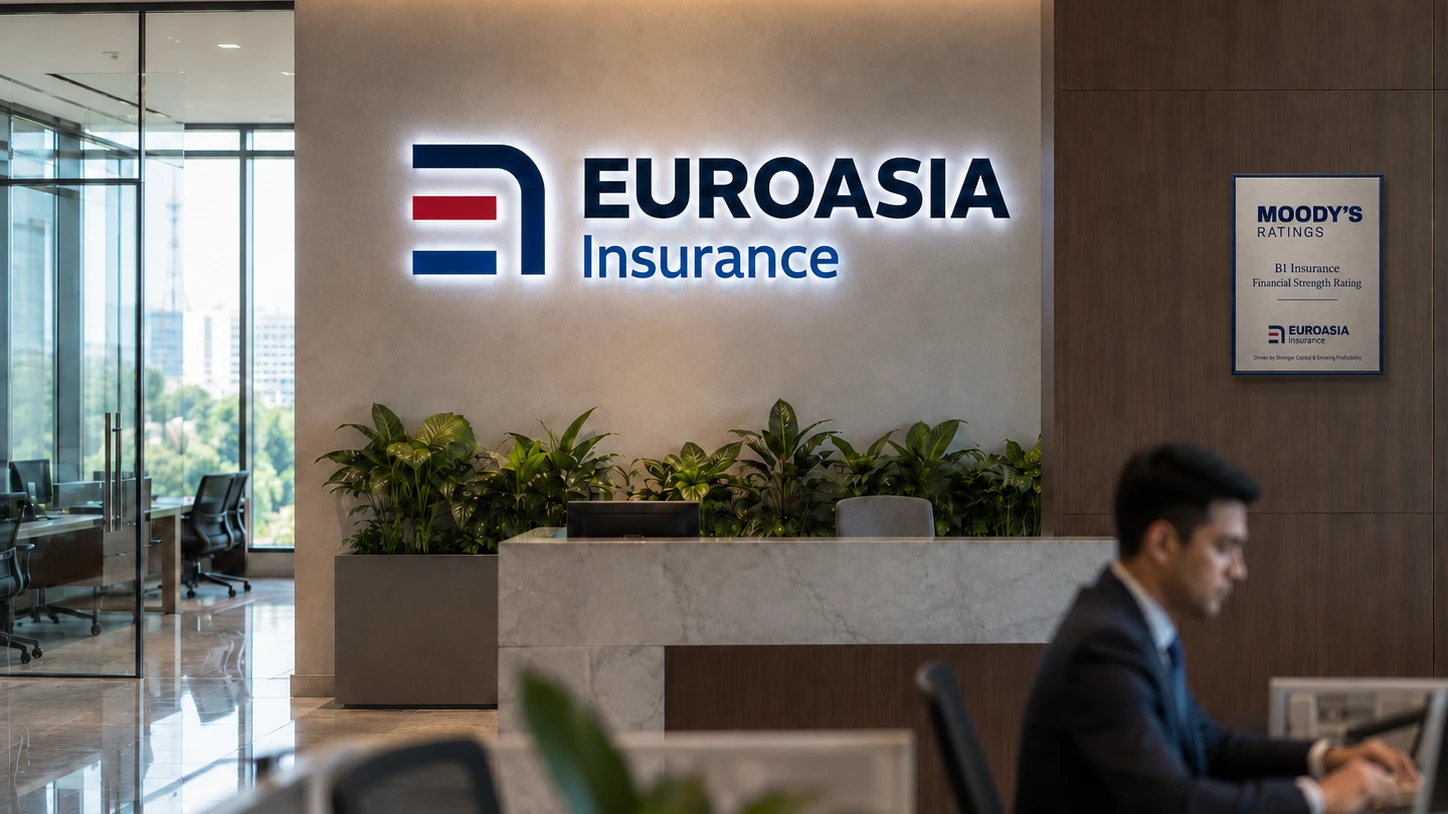
On 2 July 2026, Moody's Ratings raised the Insurance Financial Strength Rating (IFSR) of EUROASIA Insurance from B2 to B1, with a Positive outlook maintained. The decision came as part of a simultaneous review of 11 Uzbek insurers.
An IFSR is an independent assessment of whether an insurer can meet its obligations: paying claims when policyholders need it. The higher the rating, the stronger the evidence of solvency on an international scale. B1 is one notch above B2.
Why the rating went up
The upgrade rests on two levels — the country and the company.
At the country level, on 25 June 2026 Moody's raised Uzbekistan's sovereign rating from Ba3 to Ba2 (stable outlook), reflecting improvements in institutions, governance and fiscal management, as well as consistent insurance market reforms.
For EUROASIA specifically, the agency identified three factors:
capital — in 2025, shareholders recapitalised the company to a level more than 4× the minimum regulatory requirement;
asset quality and financial stability;
international reinsurance and diversification — the move into international inbound reinsurance pushed the return on capital (ROC) to 20%, up from −1% in 2024.
A Positive outlook means Moody's expects further improvement in performance and a broader presence in global reinsurance markets.
What this means — for customers and for the market
For a customer, a rating answers one question: will the insurer pay when it matters? B1 from Moody's is an external measure of solvency, not a marketing claim.
More broadly, international agencies are increasingly treating Uzbekistan's insurance sector as a credible partner. Insurance penetration stands at around 0.8% of GDP, so the market is far from saturated.
If you'd like to see what that looks like in practice, you can get a motor third-party liability (OSAGO) policy online in a few minutes.