Get 20% cashback
Add your card number at checkout — 20% of the policy price is sent to that card right away.
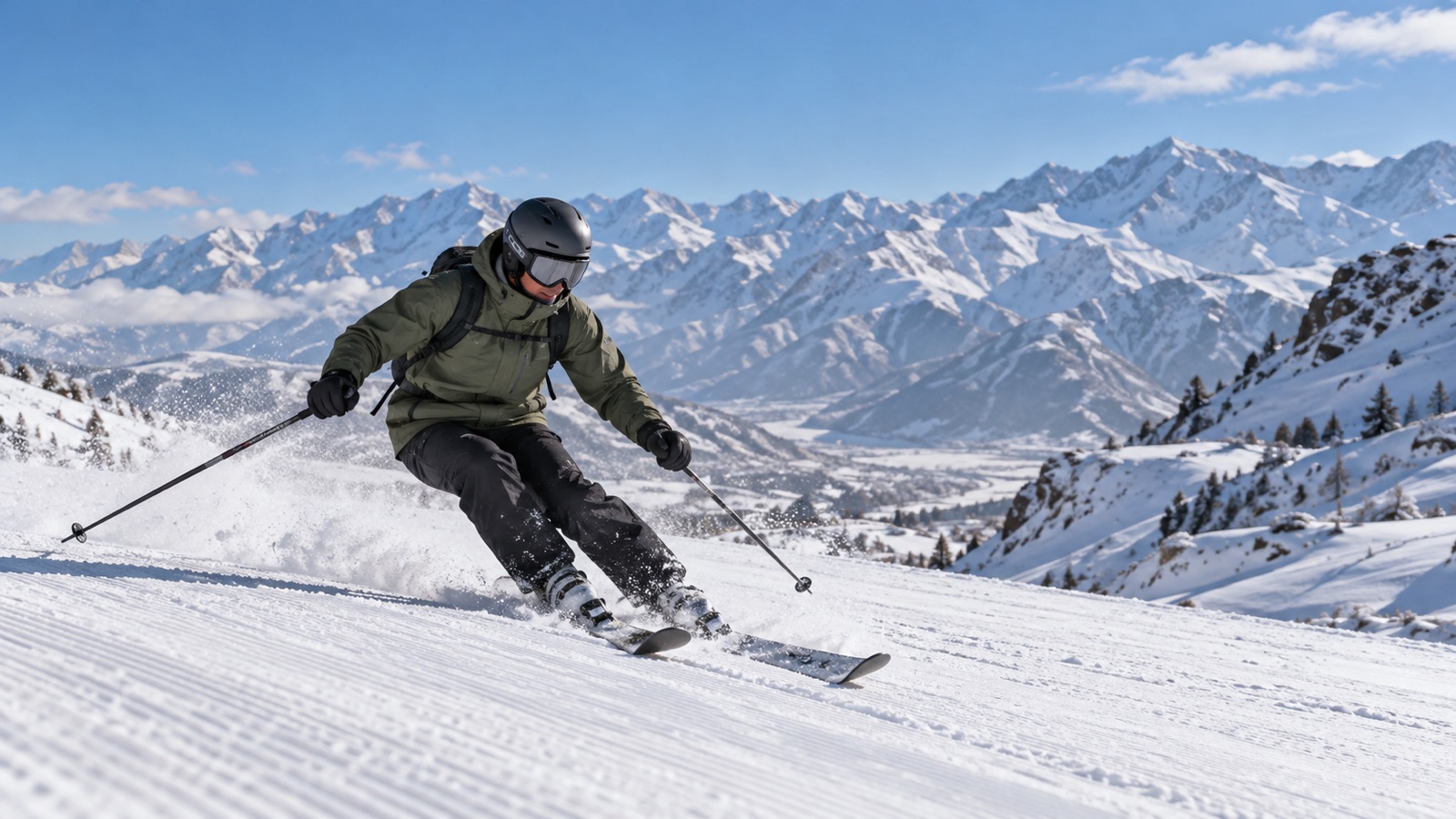
In winter, Tashkent heads for the mountains: Amirsoy is 65 km away, Chimgan and Beldersay about 80. The season usually runs from late December to March, sometimes longer at Beldersay. Here's what matters: where to ski, which injuries skiers get most often, and how the policy helps if a day on the slope ends at the doctor's.
Skiing falls under risk group 6 (extreme sports), and the policy is priced by that group. A skier's weak point is the knee: it accounts for 27–41% of all skiing injuries. More on injuries below.
The three main resorts are in Bostanliq district, Tashkent region, 65–80 km from the capital.
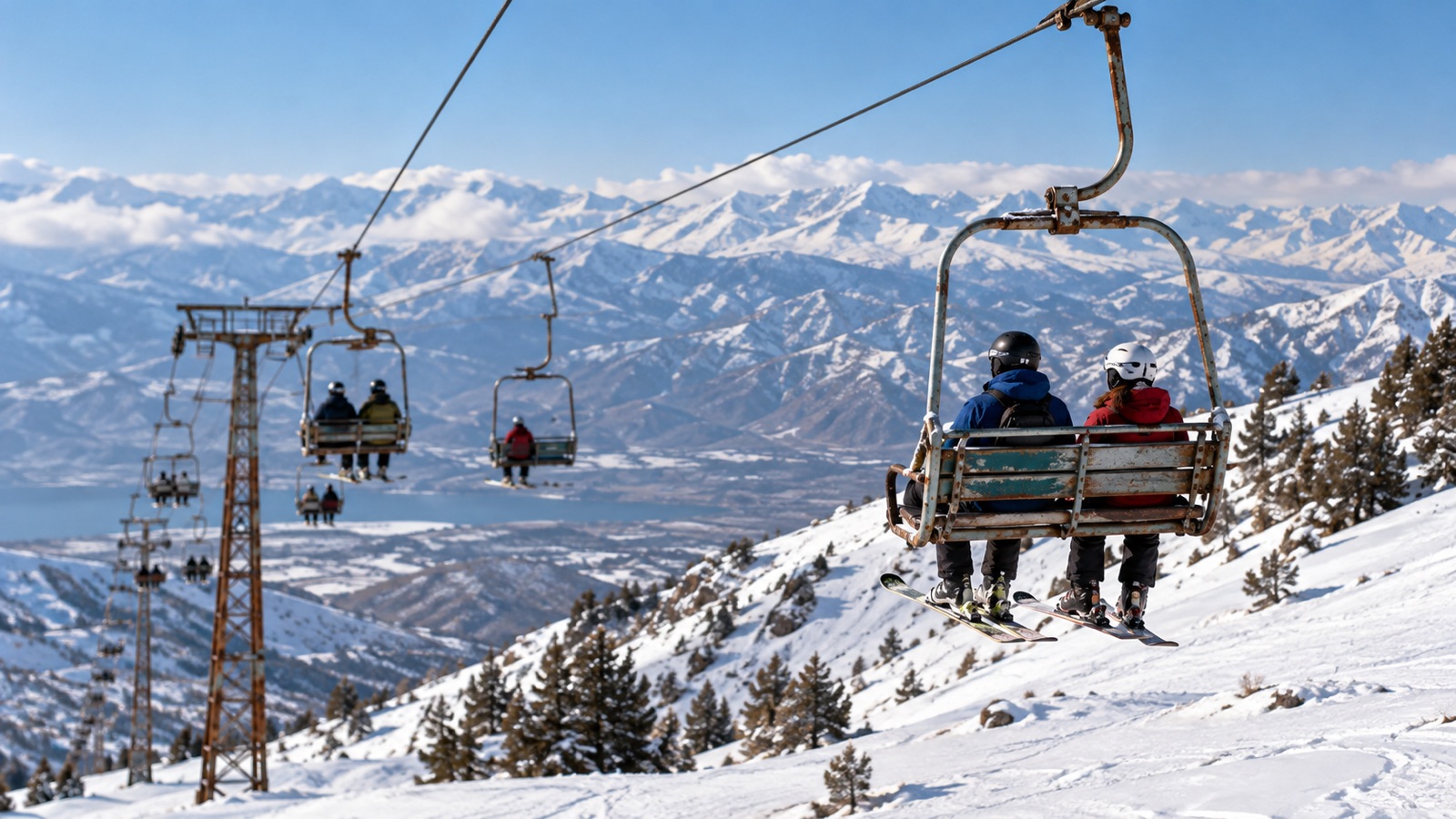
The country's newest resort, opened in December 2019. Suitable for beginners and confident skiers alike.
The oldest resort, where skiing in Uzbekistan began. Gentle terrain, and the most affordable of the three.
A mountain for experienced skiers: the country's main freeride spot, where the national freeride team trains.
No need to panic, these are just statistics. Knowing your weak points makes it easier to prepare.
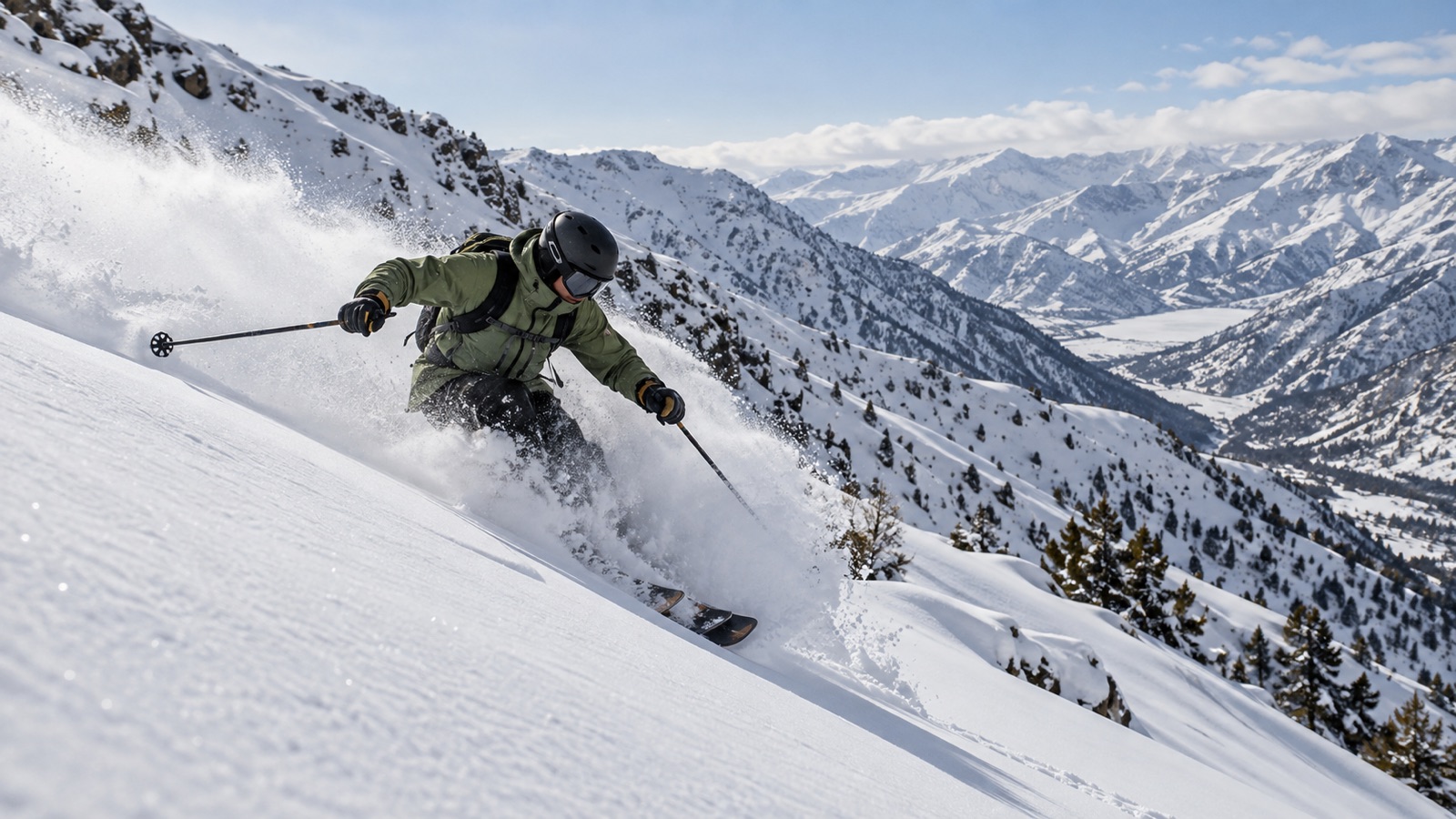
The knee accounts for 27–41% of all skiing injuries, and the most common one is a torn anterior cruciate ligament.
Shin fractures account for up to 6.4% of skiing injuries; shoulder and wrist injuries also occur.
Under Amirsoy's rules, helmets and protective gear are mandatory for children, and a helmet is mandatory for everyone in lessons with a resort instructor. Adults skiing on their own are advised to wear one. The resort doesn't patrol off-piste areas, where avalanches are possible. Visitors take that risk themselves. Tourist police and an ambulance are on site throughout the season.
At Chimgan and Beldersay, check the rules on site; the general reference for any slope is the FIS White Code, ten rules of conduct on the piste.
Data: Posch et al., Knee Surg Sports Traumatol Arthrosc (2020); "Alpine Skiing Injuries" review (NCBI, PMC6299353); Obana et al., Arthroscopy, Sports Medicine and Rehabilitation (2024); Bitner et al., Journal of Craniofacial Surgery (2024); Amirsoy resort rules.
An injury on the slope shouldn't leave you scrambling to pay for treatment. The athlete accident policy pays out, so you can focus on recovery, not costs.
A torn knee ligament, a shin fracture, a concussion: if it's recognized as an insured event, you receive a payout. Its amount depends on the nature of the injury and the sum insured you chose.
The sum insured ranges from UZS 10 to 50 million. The higher it is, the larger the payout for the same injury. Total payouts for the year never exceed the sum insured you chose.
The policy runs for a full year: enough for the whole season and your next trip to the mountains, with no need to buy a new one for every visit.
Skiing is classed as an extreme sport. Read more about insurance for extreme sports. What extreme sports insurance is and how it works: see the glossary.
The athlete accident policy protects you during training, training camps and competitions.
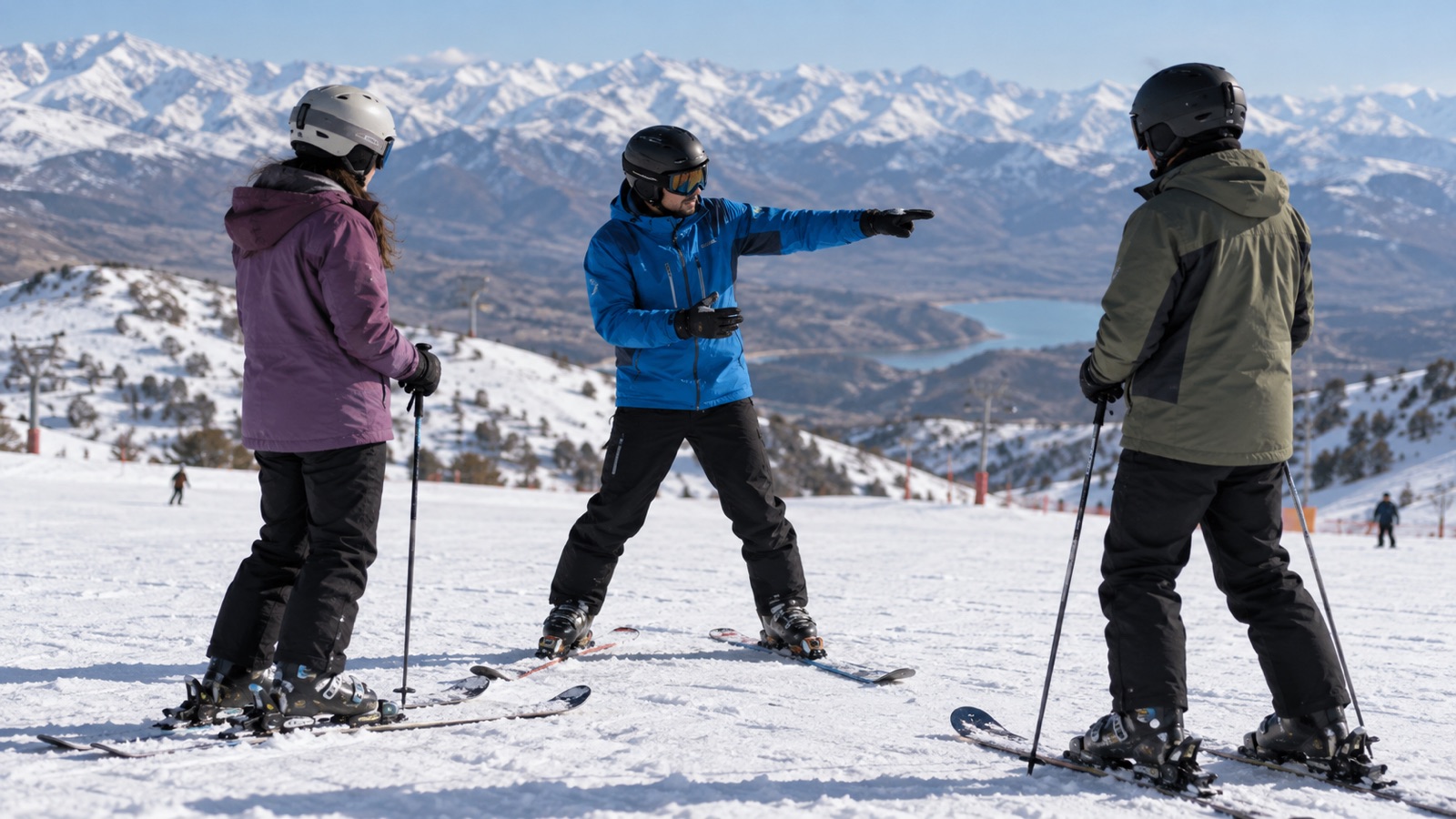
Training with an instructor or at a ski school.
Regular training at a sports club.
Training camps lasting several days or weeks, and competitions, from local to international level.
See a doctor and keep all medical documents.
Contact EUROASIA by calling 1147 within 30 days of the incident.
Submit your documents within 3 months: passport, a discharge summary or certificate from the medical facility, X-ray, CT or MRI images for fractures, and a medical report confirming you weren't intoxicated. For disability: a report from the authorized state medical commission (VTEK). In case of death: a death certificate.
Receive your payout within 15 business days after the claim report is signed.
The policy takes effect 3 calendar days after payment, so buy it in advance, before you head to the mountains.
Also read: Sports insurance in Uzbekistan: who must insure the athlete?
The formula is the same for every sport; for skiing the coefficient is 5.0. From there, the price depends only on the sum insured.
Premium = sum insured × 0.5% × coefficient
Sum insured: from UZS 10 to 50 million. The coefficient depends on the sport's risk group.
10,000,000 × 0.5% × 5.0
50,000,000 × 0.5% × 5.0
Do you snowboard? It has its own risk group and a separate page with its own calculator.
All sports and risk groups are on the sports insurance page.
The premium is calculated using the formula: sum insured × 0.5% × the sport's coefficient. The coefficient for skiing is 5.0: with a sum insured of UZS 10 million, a one-year policy costs UZS 250,000; with UZS 50 million, it's UZS 1,250,000. For the exact price, use the calculator on this page.
Travel insurance is designed for trips abroad. If you're skiing outside Uzbekistan, that's the policy you need. For skiing inside Uzbekistan, there's the athlete accident policy: it pays you after an accident, and in the worst case, pays your family.
Under the public offer agreement (clause 5.1), the policy applies during training, training camps and competitions. If you're not sure your type of skiing or riding qualifies, call 1147 to check before you buy.
The knee is hit hardest: it accounts for 27–41% of all skiing injuries, most often a torn anterior cruciate ligament. Shin fractures account for up to 6.4%, and shoulder or wrist injuries are less common. About 20% of skiing and snowboarding injuries involve the head, and a helmet cuts that risk roughly in half.
Under Amirsoy's rules, helmets and protective gear are mandatory for children, and a helmet is mandatory for everyone in lessons with a resort instructor; adults skiing on their own are advised to wear one. At Chimgan and Beldersay, check the rules on site. The general reference for any slope is the FIS White Code. Either way, a helmet cuts the risk of head injury roughly in half.
First, see a doctor and keep your medical documents. Then call EUROASIA on 1147 within 30 days. Documents must be submitted within 3 months, and the payout arrives within 15 business days after the claim report is signed.
Send us your question and we'll reply shortly

 English