Get 20% cashback
Add your card number at checkout — 20% of the policy price is sent to that card right away.
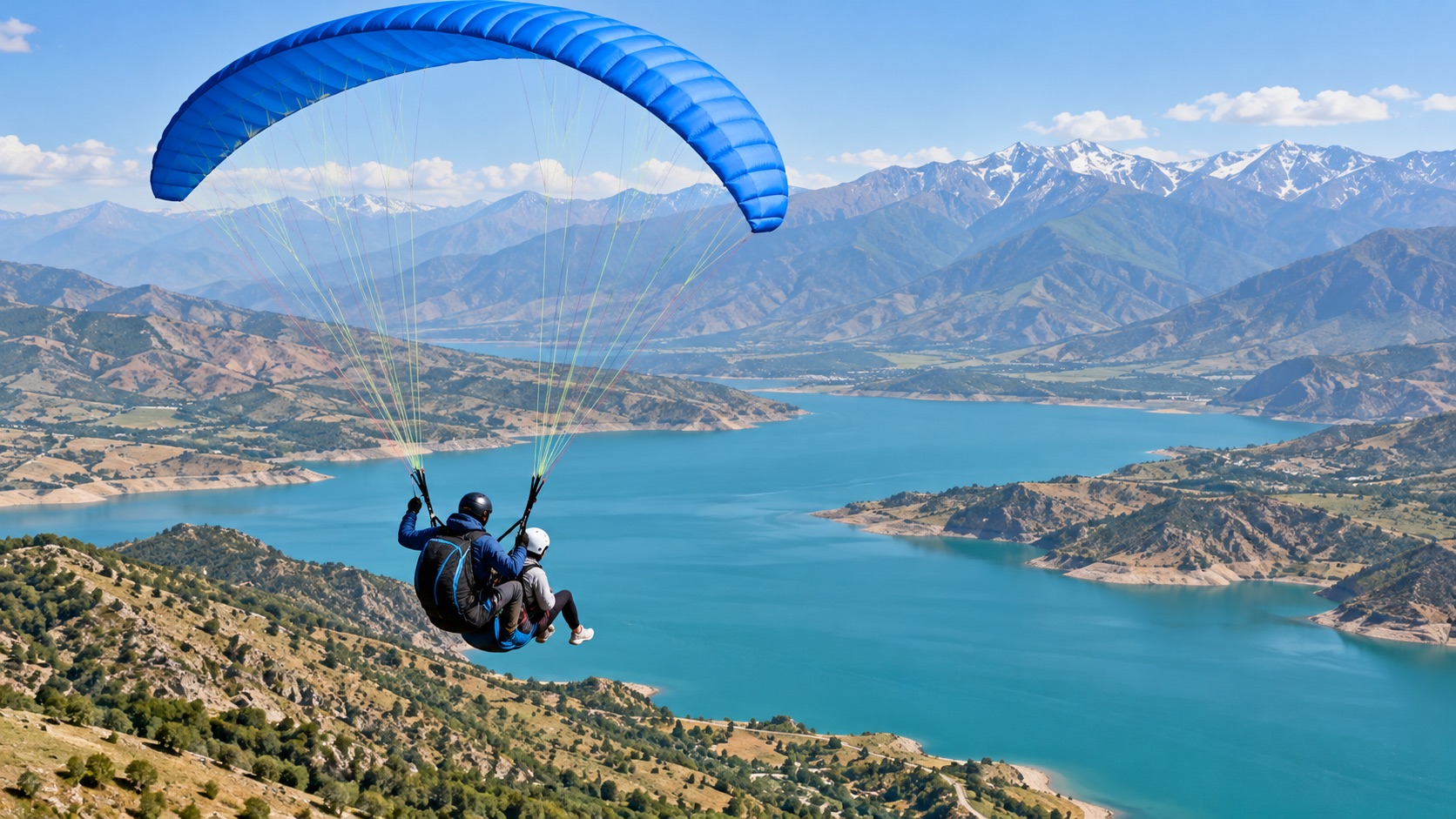
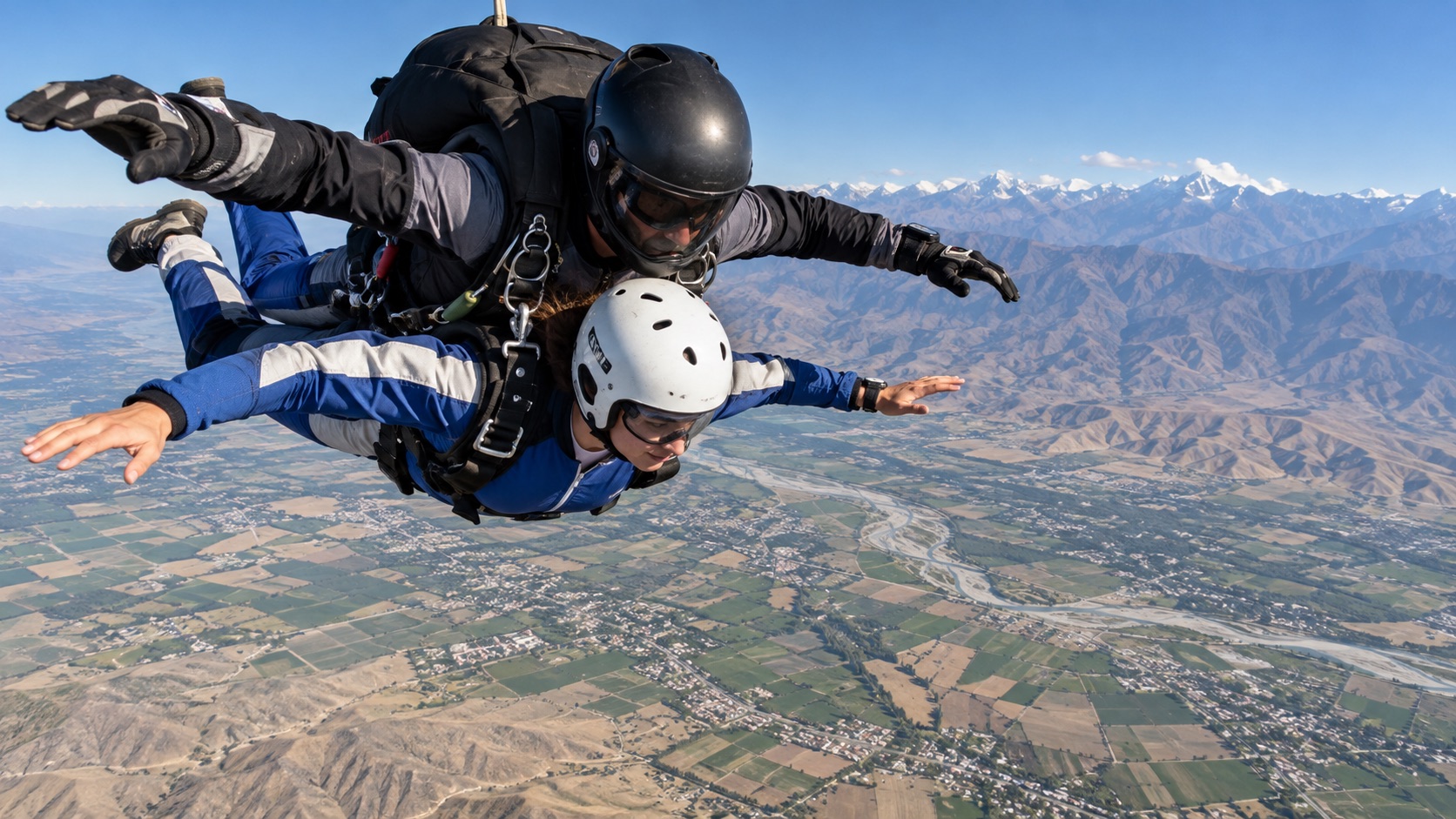
Paragliding means flying on a fabric wing. First-timers fly tandem: the instructor controls the wing, so no training is required. Skydiving has two formats: a tandem jump with an instructor, or a solo jump from 1,200 m after 5–6 hours of same-day training. Flying and jumping happen in different parts of the country: paragliding in the Charvak area, 70–80 km from Tashkent, and skydiving in Syrdarya Region.
Paragliding, hang gliding and skydiving fall under risk group 6 (extreme sports), and the policy is priced by that group. Hang gliding is rare in Uzbekistan: there's no ready-made tour for it, unlike paragliding.
The spots are far apart: paragliding happens in the mountains by Charvak Reservoir, while skydiving happens in Syrdarya Region. Hang gliding exists too, but only through clubs.
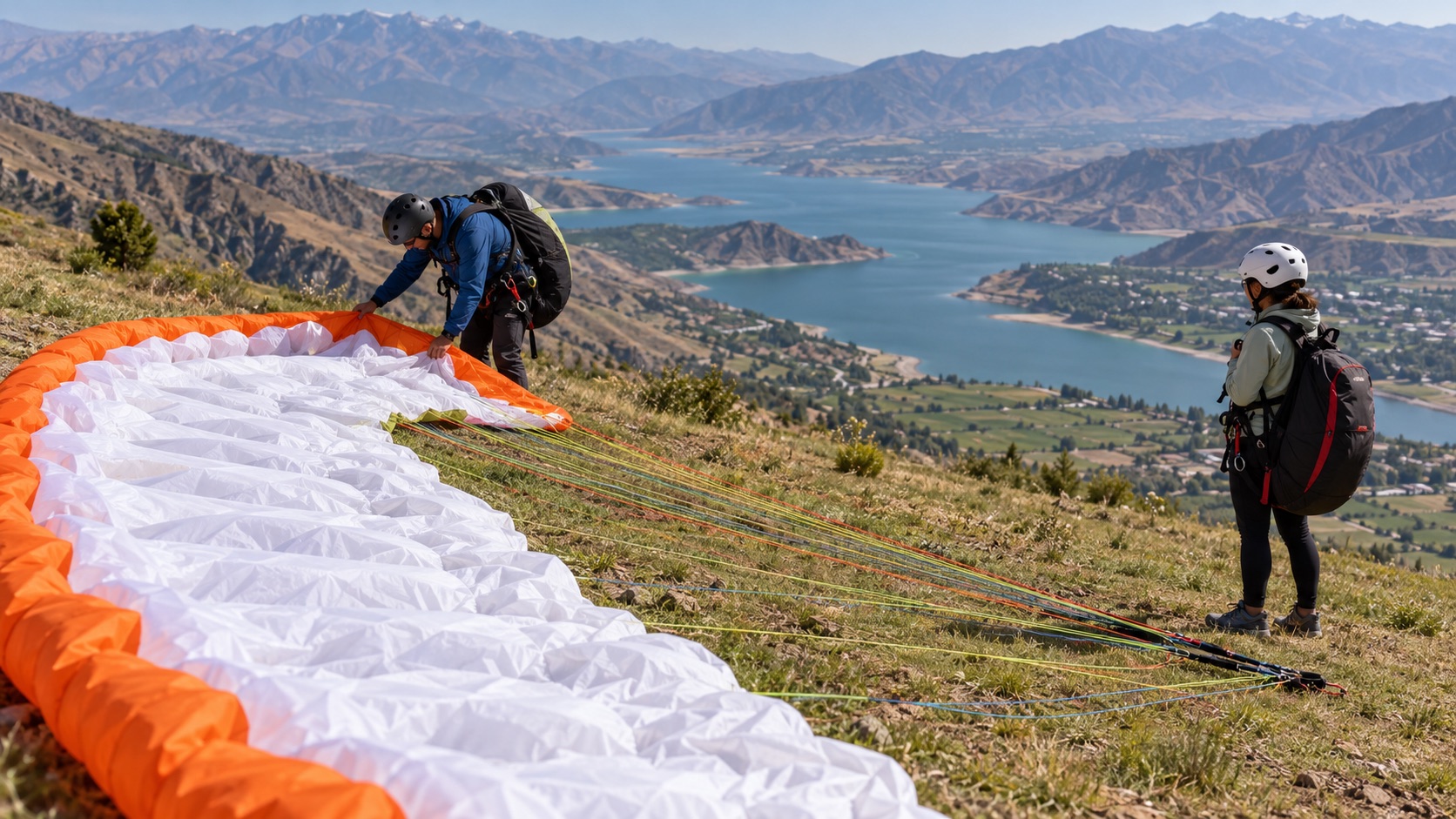
The country's main paragliding site runs along the road from the Charvak Reservoir dam to Yusufkhona village, in the Beldersay and Chimgan area. It's a registered training site: both tandem tourists and flying-school students fly here.
A skydiving center operates here in partnership with the Parachuting Federation of Uzbekistan. There are two formats, and they differ a lot in intensity.
Hang gliders and paragliders share the "Wings" section of the Aeronautics Federation of Uzbekistan, registered in 2017. The sport exists in the country, but it lives in clubs: there's no ready-made tour for beginners, unlike paragliding.
Knowing the weak points helps you prepare: wear closed-toe shoes, listen closely to the briefing, and do exactly what the instructor says on landing. The numbers come from international studies (Europe, Turkey and the US); there's no such data for Uzbekistan.
A Swiss trauma center studied air-sport casualties from 2010 to 2017, and most of them were paragliders. The spine accounted for 46.5% of their injuries. These are severe cases that reached the trauma center: the back is injured more often in a hard landing, while injuries on an ordinary training site look different.
On ordinary paragliding flights, the legs are injured most often, especially the ankle: a review of studies puts it at 29–56% of injuries. For skydivers, most injuries happen on landing. The legs account for 45–64% of injuries, with compression fractures of the spine second at 17–38%.
In France, over 10 years of data and 6.2 million jumps, not a single tandem passenger died, and they were injured noticeably less often than solo jumpers. The risk is higher in paragliding: about 1.4 deaths per 100,000 flights (United Kingdom).
In Uzbekistan, experienced pilots have died paragliding solo in difficult weather; sources don't report injured tandem passengers. And if someone is seriously injured in the mountains, they sometimes need to be taken to hospital: that's medical transportation.
Data: international studies, not Uzbekistan statistics: Canbek et al. (2015); a Swiss trauma center study (2010–2017, 235 casualties); Wilkes et al., Wilderness & Environmental Medicine (2022); French Parachuting Federation (2010–2019); The American Surgeon (2024); Swedish and military jump studies.
A bad landing shouldn't leave you scrambling to pay for treatment. The athlete accident policy pays out, so you can focus on recovery, not costs. If the flight or jump operator has their own insurance, ask exactly what it covers: it may be nothing like a personal payout for the sum you choose.
A broken ankle on a paragliding landing, a back injury after a hard parachute landing: if it's recognized as an insured event, you receive a payout. Its amount depends on the nature of the injury and the sum insured you chose.
The sum insured ranges from UZS 10 to 50 million: the higher it is, the larger the payout for the same injury. Total payouts for the year never exceed the sum insured you chose.
The policy runs for a full year: enough for the whole flying season from March to October, so you won't need a new policy for every trip to the mountains or the airfield.
Paragliding, hang gliding and skydiving are classed as extreme sports. Read more about insurance for extreme sports. What extreme sports insurance is and how it works: see the glossary.
The athlete accident policy protects you during training, training camps and competitions.
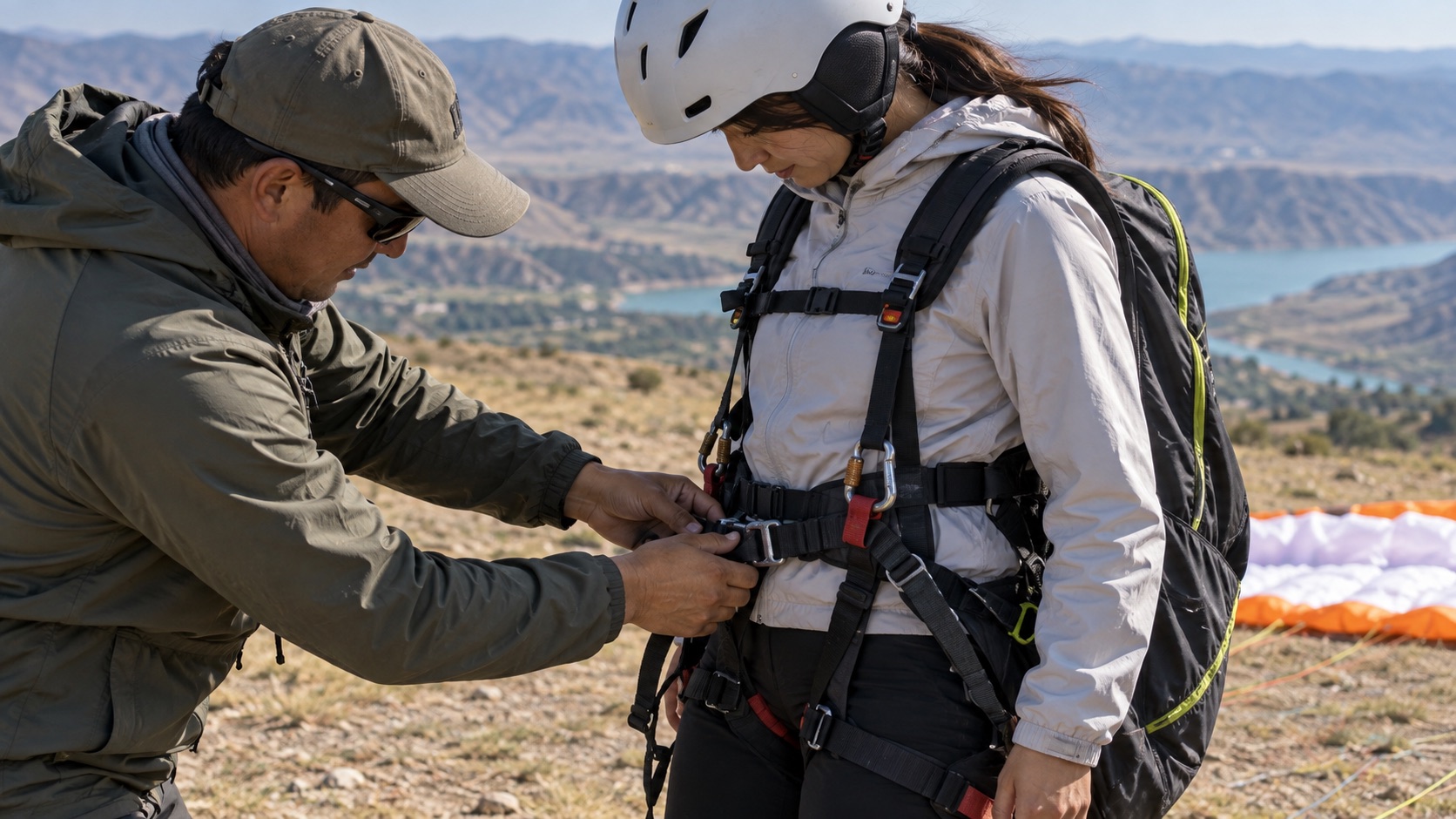
Training with an instructor, lessons at a paragliding school, and preparation for a solo skydive.
Regular training at a sports club.
Training camps lasting several days or weeks, and competitions, from local to international level, such as the paragliding festival held in Samarkand Region in May 2025.
See a doctor and keep all medical documents.
Contact EUROASIA by calling 1147 within 30 days of the incident.
Submit your documents within 3 months: passport, a discharge summary or certificate from the medical facility, X-ray, CT or MRI images for fractures, and a medical report confirming you weren't intoxicated. For disability: a report from the authorized state medical commission (VTEK). In case of death: a death certificate.
Receive your payout within 15 business days after the claim report is signed.
The policy takes effect 3 calendar days after payment, so buy it in advance, before your first flight or jump.
Also read: Sports insurance in Uzbekistan: who must insure the athlete?
The formula is the same for every sport; for paragliding, hang gliding and skydiving the coefficient is 5.0. From there, the price depends only on the sum insured.
Premium = sum insured × 0.5% × coefficient
The sum insured ranges from UZS 10 to 50 million, and the coefficient depends on the sport's risk group: riskier sports cost more.
10,000,000 × 0.5% × 5.0
50,000,000 × 0.5% × 5.0
If you're an airplane pilot, you have a different risk group, group 7, with its own price: see airplane sports insurance.
All sports and risk groups are on the sports insurance page.
The premium is calculated using the formula: sum insured × 0.5% × the sport's coefficient. The coefficient for paragliding, hang gliding and skydiving is 5.0: with a sum insured of UZS 10 million, a one-year policy costs UZS 250,000; with UZS 50 million, it's UZS 1,250,000. For the exact price, use the calculator on this page.
Under the public offer agreement (clause 5.1), the policy applies during training, training camps and competitions. A one-off tandem flight or tandem jump in a tourist format doesn't always clearly fall into that category. Not sure if your format qualifies? Call 1147 to check before you buy.
Travel insurance is designed for trips abroad: if you're going to fly or jump outside Uzbekistan, that's the policy you need. For paragliding, hang gliding and skydiving inside Uzbekistan, there's the athlete accident policy: it pays you after an accident, and in the worst case, pays your family.
It depends on the operator. One paragliding operator takes tandem passengers from age 18 and up to 110 kg. At the skydiving center in Syrdarya Region, a tandem jump is available from age 12: minors jump paired with an experienced instructor. The instructor makes the final call either way, so confirm the conditions when you book.
Both are riskier than training in a gym, but a tandem flight with an instructor is one of the most controlled formats in extreme sports. In France, over 10 years of data, not a single tandem skydiving passenger died. When an injury does happen, the ankle and legs are affected most often, the spine less often. There's no data for Uzbekistan.
First, ask the operator exactly what their insurance covers. It may not cover the same thing as the athlete accident policy: a personal payout, for the sum you choose, in case of injury, disability or death. The athlete accident policy is issued in your name, and you choose the sum insured yourself, from UZS 10 to 50 million.
Send us your question and we'll reply shortly

 English