 English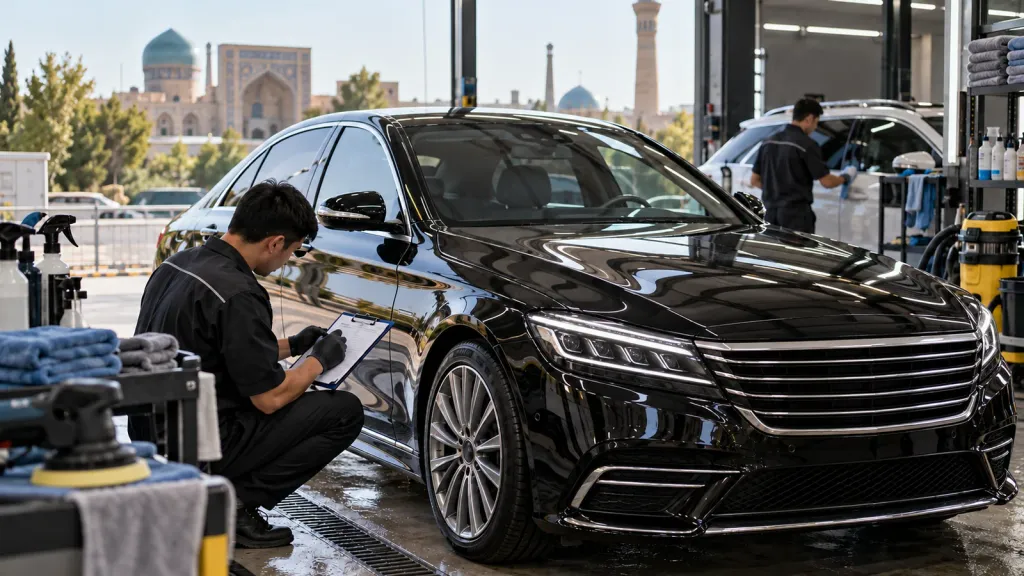
A premium car pulls into a wash bay. The service advisor misses an existing scratch, and the customer notices it after the wash. The business now has two problems to solve: keep a new customer and establish who is responsible for the damage.
Growth for a car wash or detailing center is not only about advertising. KASKO Club can introduce the business to premium car owners. At the same time, the site, equipment, employees, and customer vehicles all create distinct risks. These priorities meet in one operating process: inspect the vehicle properly, deliver the agreed service, and arrange suitable insurance before an incident occurs.
What KASKO Club Provides and What It Does Not Promise
KASKO Club is intended for owners of premium cars up to five years old who have a KASKO Deluxe policy. Club benefits include service at a partner car wash and a discount of up to 10 percent on detailing.
For a service center, the partnership can provide a reason for a first visit. It does not guarantee customer volume or provide a ready-made sales plan. Requirements for partner car washes, settlement procedures, territory, and other commercial terms should be discussed directly with EUROASIA.
Apply the club benefit correctly, then make the first visit good enough to earn the next one. The customer journey can be described in four straightforward steps:
- Verify the club status and explain which service the benefit includes.
- Inspect the vehicle and agree on the core service.
- Offer additional work only when it is genuinely relevant.
- Hand over the vehicle, record the outcome, and agree on the next visit.
How to Handle a Club Member's First Visit
The service advisor should first verify the club benefit and explain exactly which service it includes. The vehicle should then be inspected with the customer. Only after that should the team confirm the scope, timing, and price.
There is no need to force an add-on during intake. If the condition of the car supports it, the advisor can quote paint polishing, deep interior cleaning, or a protective coating separately. The customer should be able to distinguish the core service from the additional work and its price.
Track the partnership with four practical measures:
- Visits referred through KASKO Club.
- The share of customers who buy an additional service.
- Repeat visits.
- Average spend among club members.
These figures provide a basis for evaluating the partnership and show which services attract demand.
Seven Items to Record at Vehicle Intake
A dispute can begin with the records made before any work starts. The customer and the center may remember the vehicle's original condition or the agreed service differently. Set a consistent intake process in advance.
Record the following for every vehicle:
- The customer's name and phone number, plus the vehicle details.
- The exact list of services ordered.
- Wide photographs of the body, glass, wheels, and interior.
- Close photographs of existing scratches, dents, cracks, and other damage.
- Keys, accessories, and items left inside the vehicle.
- The agreed price, completion time, and method for approving additional work.
- The customer's confirmation of the inspection record.
Add written notes to the photographs. The work order and vehicle condition can be combined in one intake form. If damage occurs, record the incident and the action taken in an internal report immediately. This does not guarantee insurance coverage, but it helps the parties review the incident using evidence.
Match Each Risk with the Right Protection
One policy will not cover every risk in a car wash business. A corporate insurance portfolio should be assembled around separate assets and liabilities.
| Risk | What may be affected | Option to consider |
|---|---|---|
| Fire, water, or a natural event | A building, structure, or occupied premises | Commercial property insurance |
| External damage or machinery breakdown | Wash systems, compressors, polishers, and other equipment | Review the terms of equipment insurance separately |
| Injury or property damage to a third party during normal operations | A customer's or another person's life, health, or property | General liability insurance |
| An employee's workplace injury or occupational illness | The employer's liability to the employee | Compulsory employer's liability insurance |
| Damage to a vehicle accepted for service | The customer's vehicle | Agree individual coverage with the insurer |
Customer vehicles require a separate check. The standard terms of EUROASIA general liability insurance exclude liability for property that the policyholder owns, rents, or accepts for safekeeping. A car left with a car wash may fall within this exclusion. Holding a standard policy therefore does not automatically mean that the customer's car is covered. Coverage for customer vehicles, the limit, deductible, and price are agreed individually.
Define the insured property precisely in a property contract. The EUROASIA product protects a building, structure, or premises. Wash systems and other machinery are not automatically included. Their protection should be checked under the separate equipment insurance terms. The contract should state exactly what qualifies as insured property.
Insurance Does Not Replace the Operating Process
Insurance is designed to reduce the financial impact of a major loss. Saving camera footage, completing the intake form, and assigning staff responsibilities remain the center's own operational tasks.
A basic process may look like this:
- the service advisor receives the vehicle and records its condition;
- the technician performs only the approved work;
- additional work begins after the customer approves it;
- the center completes a final inspection before handover;
- if an incident occurs, management is notified and evidence is preserved.
A written process shows what the customer approved and helps the center choose insurance terms that match its actual operations.
A Practical 30-Day Plan
In week one, review the service list and intake process. Write down when the vehicle is photographed, who approves extra work, and who makes decisions after an incident.
In week two, discuss a KASKO Club partnership with a EUROASIA manager. Ask which service is available to club members, what the partnership criteria are, how settlements work, and how a member is identified. Do not assume terms that are not shown on the public page.
In week three, introduce an intake form and photography procedure. Work through several practical scenarios with the team: an existing scratch, a valuable item left in the cabin, a need for additional work, and damage during service.
In week four, compare the insurance portfolio with the risk map. Mark the protection available for the premises, equipment, third parties, employees, and customer vehicles separately. Then begin a monthly record of KASKO Club visits, add-on sales, and returning customers.
Quick Answers
Does a KASKO Club partnership guarantee customers?
No. It can provide an additional way to meet premium car owners. The result depends on the partnership terms, territory, service quality, and the center's ability to earn repeat visits.
Does general liability insurance cover a customer's car?
Property accepted for safekeeping is excluded under the standard terms. Coverage for customer vehicles must be agreed with the insurer individually.
If the building is insured, is the wash equipment covered too?
Not automatically. Commercial property insurance applies to a building, structure, or premises. Machinery requires a separate review of the equipment insurance product and its terms.
Which insurance applies to employees?
Compulsory employer's civil liability insurance applies in Uzbekistan. It concerns the employer's liability when an employee suffers harm to life or health in connection with work.
Next Step
Start by separating the two objectives. To work with the KASKO Club audience, request the partnership terms. To protect the business, compare general liability insurance, property insurance, equipment insurance, and employer's liability cover separately. The key question is straightforward: if a customer's vehicle is damaged while it is in the center's care, does the current contract cover that exact situation?