English
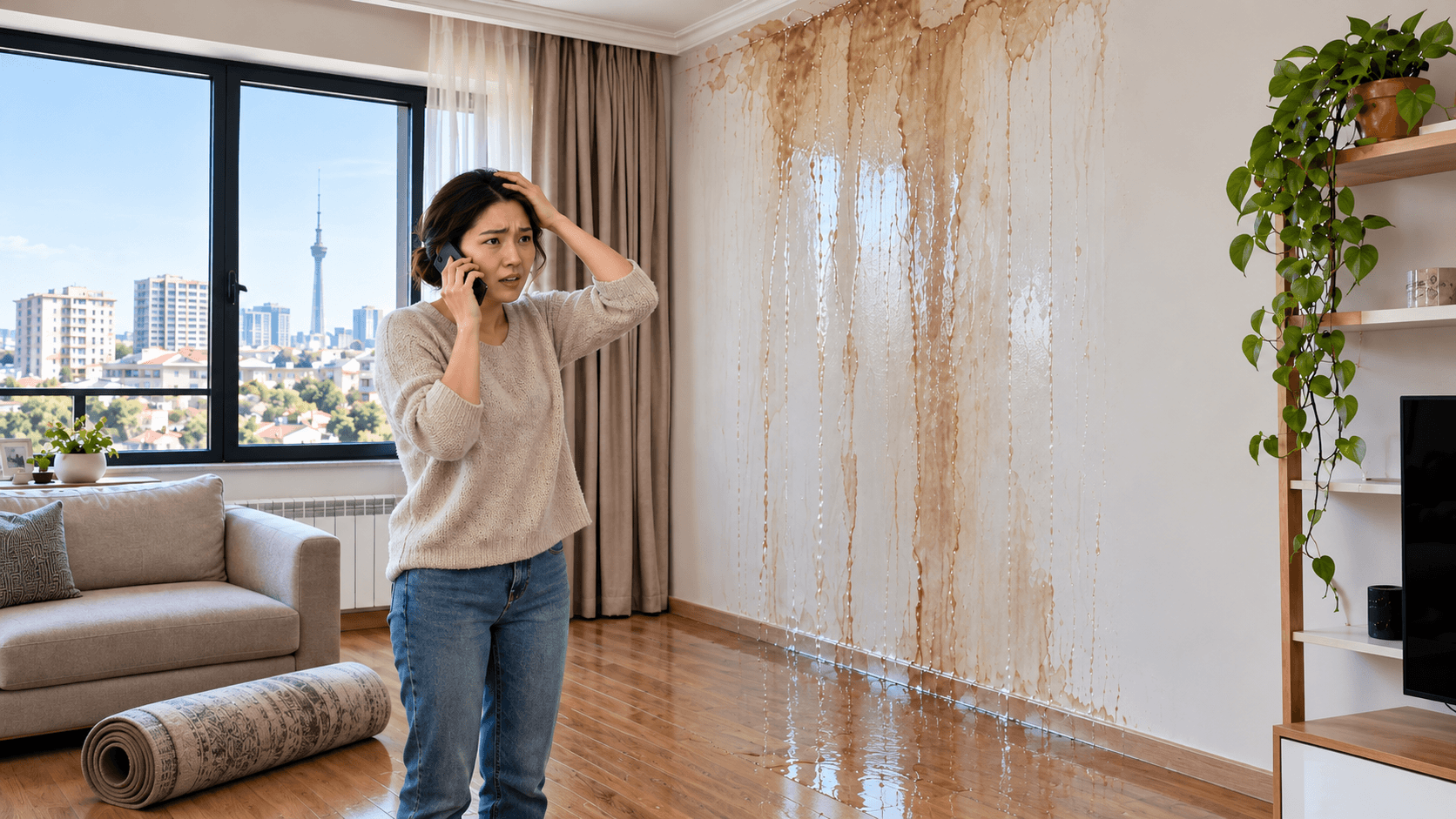
If water enters your home, a fire spreads, or cracks appear after an earthquake, make sure everyone is safe first. Then tell your insurer and gather evidence of the damage. This guide follows EUROASIA Insurance’s COMPLEX 0809 offer; the decision depends on your policy and the evidence.
Keep everyone safe first
If there is a fire or another danger, leave the building and call 112, or 101 for the fire service. Do not go back inside to take photos. If there is flooding, do not touch wet wiring; stop the water only if it is safe to do so. During an earthquake, stay away from windows and heavy objects, protect your head and neck, and do not use the lift. These are safety tips, not policy conditions.
Step 1 — Check your policy and what caused the damage
Open your policy and check which home it names. Under the offer, insured property for an individual is the flat, dacha or residential house listed in the policy. If a house consists of several buildings or has inseparable extensions recorded in the cadastre, they must be listed in the policy. The offer does not list furniture or appliances as insured property; check the policy and exclusions for damage to finishes. Also check the address, sum insured and any listed additional buildings: use these details to identify which insured property was damaged.
Check when you paid and when the policy was issued: EUROASIA’s obligations begin seven calendar days after both payment and policy issuance. The event must occur during the insurance period and in Uzbekistan. The table classifies the cause; it does not guarantee an insurance payout — money paid for a recognised loss.
What happened? | How does the offer treat it? |
|---|---|
Water came from a neighbouring room or from a water, sewerage or heating system at the insured address | It may fall under “water damage” |
A river or lake rose, or a dam failed and flooded the area | A separate “flood” risk, not a leak from a neighbouring room |
Water seeped through the roof, a window or a wall | Excluded under clause 3.1(k) of the offer |
A fire can spread on its own beyond the place intended to contain it, or an earthquake caused damage | The relevant risk is listed, but the circumstances still need to meet the terms and be supported by evidence |
A leak from a neighbouring room is not a natural-disaster flood. Fire risk is also assessed against the exclusions and evidence.
Step 2 — Tell EUROASIA within two separate deadlines
Tell EUROASIA about the event within 72 hours of when it happened. Separately, send written notice no later than five working days after the event. One does not replace the other. Call 1147 to ask how to submit written notice, and keep a record of your contact. Calling 112 or 101 does not count as notifying the insurer.
Late notice or missing evidence may lead to a refusal. Do not wait for the documents before reporting the event.
Step 3 — Document the damage and its cause
Once the site is safe, photograph the damaged insured property: the offer requires photos. Video may help too, but it does not replace formal documents. Do not present an old defect as new damage.
Your written payout request and application to have the event considered need a copy of a cadastral or title document. If those documents were destroyed in the event itself, the offer allows another document showing the property’s details. You also need the original document from the relevant authorised state body confirming the cause and damage. The right body depends on the event: the offer names, among others, the fire service and the Seismology Centre. If water came from a neighbouring room, ask EUROASIA exactly which official document is needed. Do not assume a neighbour’s signature or a building management report is sufficient in every case. The event’s time, place, cause and damage need to be established, so it helps to ask in advance which confirmation is appropriate.
Step 4 — Arrange a valuation and inspection
Prepare the original document from an authorised valuation organisation to establish the amount of damage. Before commissioning a valuation, ask EUROASIA which organisation’s document it will accept. Let a EUROASIA representative inspect the property, and provide any additional documents requested. Photos support the damage, the official record supports its cause, and the valuation supports the amount.
Under the offer, if the documents listed in clause 6.3 are not provided within three calendar months without objective reasons, the insurer may decline to recognise the event and refuse payment. Refusal is not automatic. Tell EUROASIA why there is a delay and keep your correspondence.
Three hypothetical situations
A neighbour’s pipe. If an upstairs pipe bursts and wets a wall, this may be water damage from a neighbouring room, not a natural flood. Take photos, report it within both deadlines and ask which official document is required. Check your policy for coverage of the sofa and finishes.
A kitchen fire. If flames spread beyond the stove, leave first and call 112 or 101. When it is safe, record the damage and obtain the relevant official document about the fire’s cause; exclusions will be checked.
A crack after an earthquake. If you notice a wall crack after a tremor, make sure you are safe first. Record the damage and ask what confirmation is needed from the Seismology Centre; do not present an old crack as a new one.
Decision and payment deadlines
An insured event is one recognised as meeting the policy and offer terms. If EUROASIA recognises the event, the parties sign an insured-event Act stating the amount. For partial damage, restoration costs are calculated up to the sum insured. For total loss, the insured sum in the offer applies. Restoration costs may include materials, labour, delivery of materials and costs under a project estimate. The payout amount depends on the documents and policy.
1Safety
2Report within 72 hours
3Written notice no later than 5 working days
4Documents and inspection
5If recognised, sign the insured-event Act
6Payment within 15 banking days
The 15 banking days start on the date the Act is signed, not on the date of the event, call or application. The offer defines the payment date as the day the money is debited from EUROASIA’s account. If the insurer refuses after receiving all documents, it must communicate the reasons within 15 days. If criminal, civil or administrative proceedings are opened concerning the event, the payment decision may be delayed until the competent authority has decided.
Common mistakes
Calling a leak from a neighbouring room a natural flood, or assuming seepage through a roof, window or wall is covered.
Assuming wet furniture, appliances and all finishes are covered without checking the policy.
Missing either the 72-hour report or the five-working-day written notice.
Treating photos or a call to 112 as a substitute for an official document about the cause.
Expecting payment “15 days after applying”: the payment clock starts when the Act is signed.
Refusing to bring a claim against the responsible person: under the offer, this releases the insurer from payment.
Check carefully: the property named in your policy, the payment and issue dates, the cause of damage, exclusions and the required official document. For earthquakes, the offer uses the exact Russian wording “5,0 баллов и выше по шкале Рихтера” (literally, “5.0 points and above on the Richter scale”). Do not reinterpret those mixed units yourself; ask EUROASIA how the wording applies to your event. Do not assume that finishes or belongings are covered, or that every fire will result in payment.
This offer does not promise liability cover for damage you cause to a downstairs neighbour; check separate liability insurance. The guide to a KASKO claim without a road accident concerns another product: do not apply its documents or deadlines to home insurance.
If you already have a policy, call 1147 to ask which documents your case needs. If you are considering home insurance, review EUROASIA’s home insurance terms and, if the insured property suits your needs, take out a policy.